
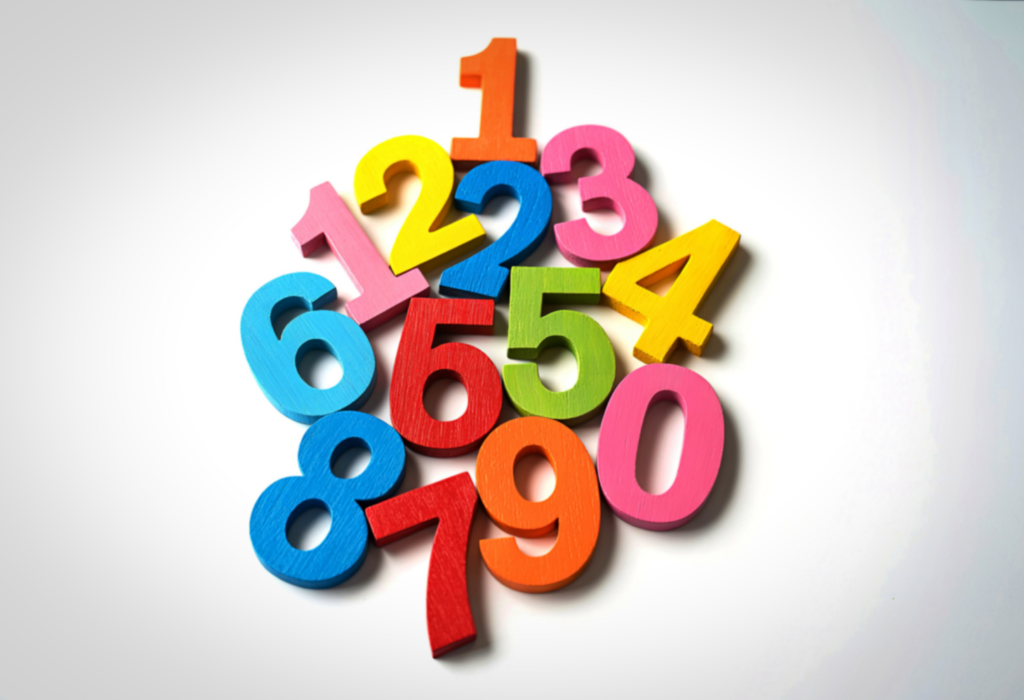
Dyscalculia which is sometimes called “number blindness” is a learning difficulty in which an individual has difficulties with numbers and mathematics, making it difficult to make sense of the symbols and their order. It is also sometimes referred to as ‘Number Dyslexia’, as Dyscalculia is not as well known.
It is suggested that around 4 million people in the UK have Dyscalculia and millions more are affected with processing numbers. The individual can just be affected by the condition, but quite often can also feel Anxiety over numbers and mathematics, plus it can often happen alongside other learning difficulties, regardless of academic background and abilities, as it is known to be genetic.
Signs of Dyscalculia which can make everyday life tiring to deal with
- Difficulty with maths.
- Can undertake a process to get the answer, but is unsure of why and how, being unable to explain it.
- Struggles with receipts to check if they are correct.
- Finds it difficult to manage their bank accounts or budget due to the numbers.
- Unable to retain phone numbers.
- Times of travel and distance can be difficult to work out.
- Dealing with numbers can make the individual feel anxious.
Effects of Dyscalculia
It estimated by the British Dyslexia Association (BDA) that 1 in 4 people are affected by numbers. Suggesting difficulties in:
- Processing the information related to numbers.
- Short term memory in processing the information.
- Difficulties working out money and times.
- The general reading and writing of numbers, where to place decimals and values.
- Remembering mathematical calculations.
- Mathematical language.
- Remembering numerical facts such as times tables.
- Mathematical concepts in general.
Diagnosis and Assessment
Initially it might be worth having an informal assessment by someone who has had some training and insight into the condition, as this will then give the individual an idea if a formal assessment might be needed to confirm diagnosis. The British Dyslexia Association (BDA) has a referral assessment service if this is something that an individual would like to explore; please see the BDA link included at the bottom of this blog which might be helpful, in sourcing a Specialist Assessor with a level 7 qualification or equivalent, needed to assess for Dyscalculia.
Support
Findings from research encourages individuals with Dyscalculia to visualise numbers from an early age if possible. Options such as thinking of the symbols as a dice pattern or a numicon tile, which is a multi-sensory approach to teaching math that uses physical shapes to help understand numbers, and connect with the numbers, because if they have no meaning the individual is less likely to remember them.
Self-help
We all have different styles of learning, so it makes sense to find a way that works for the individual, which could be visual, finding pictures helpful, colours or diagrams. It is important to give time to process the numbers, as getting stressed will hinder the learning. Letting others know how you feel can be helpful to give them insight, of how you are affected and how frustrated or confused you might be. It can be difficult to let others know about your learning difficulty, but unless you do, they won’t have insight and understanding, with the positive outcome of trying to support you.
Calculators, a digital clock, assistive technology, support with certain tasks and extra time to process mathematical tasks can be helpful in the work environment.
Further Information
Dyscalculia – British Dyslexia Association
The Dyscalculia Information Centre – The Dyscalculia Information Centre
For more interesting reads, head over to https://asclepius-ohs.co.uk/blog