
The skin is the biggest organ in the body, with many functions:
- Maintaining temperature by protecting us from heat and cold by using sweat glands and fine hairs
- Absorbing vitamins such as vitamin D
- Acting as a barrier to infection
- Preventing dehydration
- Sensory – allowing a person to feel.
What is Eczema?
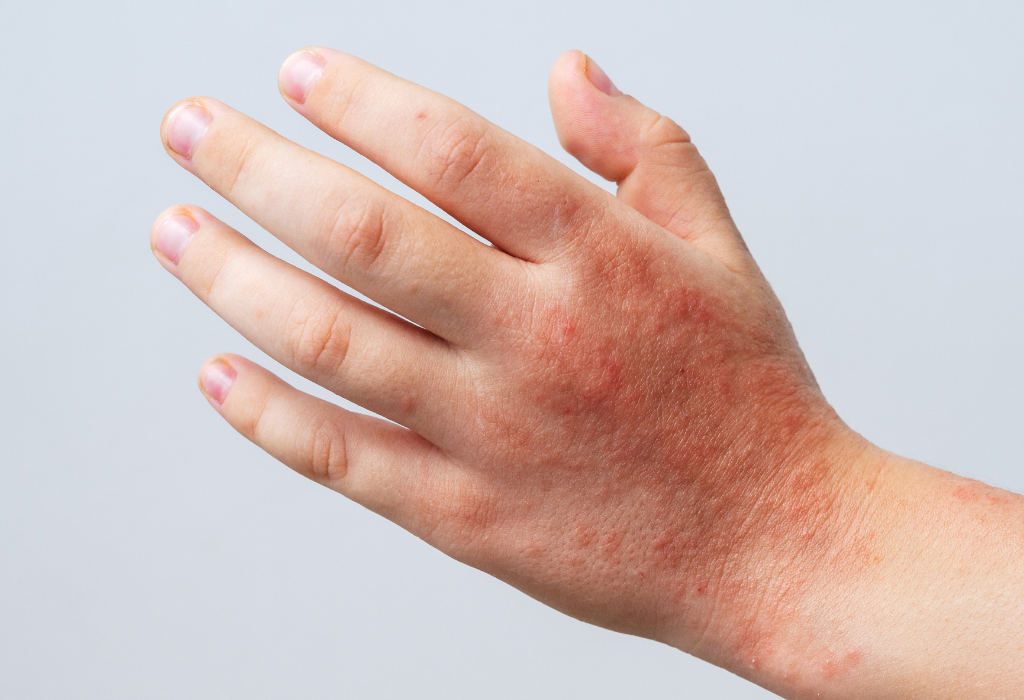
Eczema is a skin condition that causes itchy dry skin patches, which can become inflamed and sometimes infected. Many times, it is not known why a person has Eczema, and sometimes it can be an allergic response and can accompany conditions such as hay fever, asthma and allergies. It is thought that the gene that maintains the normal skin barrier is affected, making the skin more susceptible to infections, with bacteria and viruses being able to permeate the skin more easily. The condition tends to run in families and generally starts in childhood. Eczema is characterised by periods where the condition is in a ‘flare’ and times when the rashes and itching can cease.
How to Diagnose?
It is not necessary to undergo any particular tests in order to diagnose eczema, and it is usual for a General Practitioner (GP) to be able to do this after looking at the skin. Allergy testing may be suggested to see if there is anything in particular that may trigger a flare up in the future.
How to Treat Eczema?
It is essential for people with this condition to look after the skin to make it as healthy as possible, by applying regular creams. Everybody with Eczema will have a cream they prefer, but generally it should be a cream without additives and fragrance, as these can irritate the skin. In the absence of using creams the skin can be very itchy, causing a person to scratch, which is not good as it causes a break in the skin barrier. Once the barrier is broken the risk of infection increases.
Having Eczema makes the skin more reactive to substances that a person may encounter every day, such as soaps, detergents and lotions. This may not only be at home, as many times people are exposed to chemicals and skin irritants in the workplace. Because of this it is essential that a person with Eczema advises their employer that they have a skin condition so they can be assessed prior to working, to make sure they are not exposed to any substance that may cause them harm. The company would then be expected to carry out a risk assessment, making sure that any exposure to an irritant to the skin is avoided wherever possible and Personal Protective Equipment (PPE) such as gloves are provided. The choice of gloves is important as in some instances a person can have a latex allergy which can cause an exaggerated response if latex were able to get through the skin barrier, resulting in serious consequences.
Treatment Options
Treatment for Eczema is usually topical, meaning applied to the skin, such as a cream/lotion. It may be necessary if the flare up is extreme for steroid creams to be prescribed to reduce the inflammation. Similarly, if there is infection, there may be a need for antibiotics. An antihistamine can help if the rash is thought to be due to an allergic response. Sometimes it is worth trying an antihistamine and seeing if it works.
Most of the time a GP will be able to manage the treatment for eczema, although in persistent and severe cases it may be necessary for a referral to a dermatologist, who has access to a further range of treatments, including:
- Ultra-violet Light Therapy
- Immunotherapy agents, which can reduce the immune response causing the flare-up.
It is hoped that regular good care of the skin and avoidance of those items that cause flare-ups, should keep them to a minimum.
Managing Eczema at Work
Living with eczema can be challenging, particularly when symptoms flare up. Itching, soreness, cracked skin, and irritation can affect comfort, concentration, sleep, and day-to-day activities. In some cases, workplace substances such as soaps, detergents, cleaning products, chemicals, or prolonged glove use may contribute to symptoms or trigger flare-ups.
Asclepius Occupational Health & Wellbeing can support both Employees and Employers in understanding how eczema may be affected by work activities and workplace exposures. Occupational Health can help identify potential skin irritants, advise on suitable control measures, and provide recommendations to reduce the risk of symptoms worsening in the workplace.
Support may include reviewing workplace risks, advising on appropriate Personal Protective Equipment (PPE), recommending reasonable workplace adjustments where necessary, and helping Employers create a safe and supportive working environment for Employees living with skin conditions.
Early intervention can often help prevent symptoms from escalating, reduce discomfort, and support Employees in remaining healthy, safe, and productive at work.
If you or a member of your team has eczema and would like advice, guidance, or support, please get in touch with Asclepius Occupational Health & Wellbeing. We are here to support both Employees and Employers in managing health conditions effectively in the workplace.